Before a complex assignment, the work that makes the biggest difference often happens away from the client. It happens in preparation: reading the brief, testing assumptions, aligning terminology, and rehearsing the moments where communication is most likely to break down.
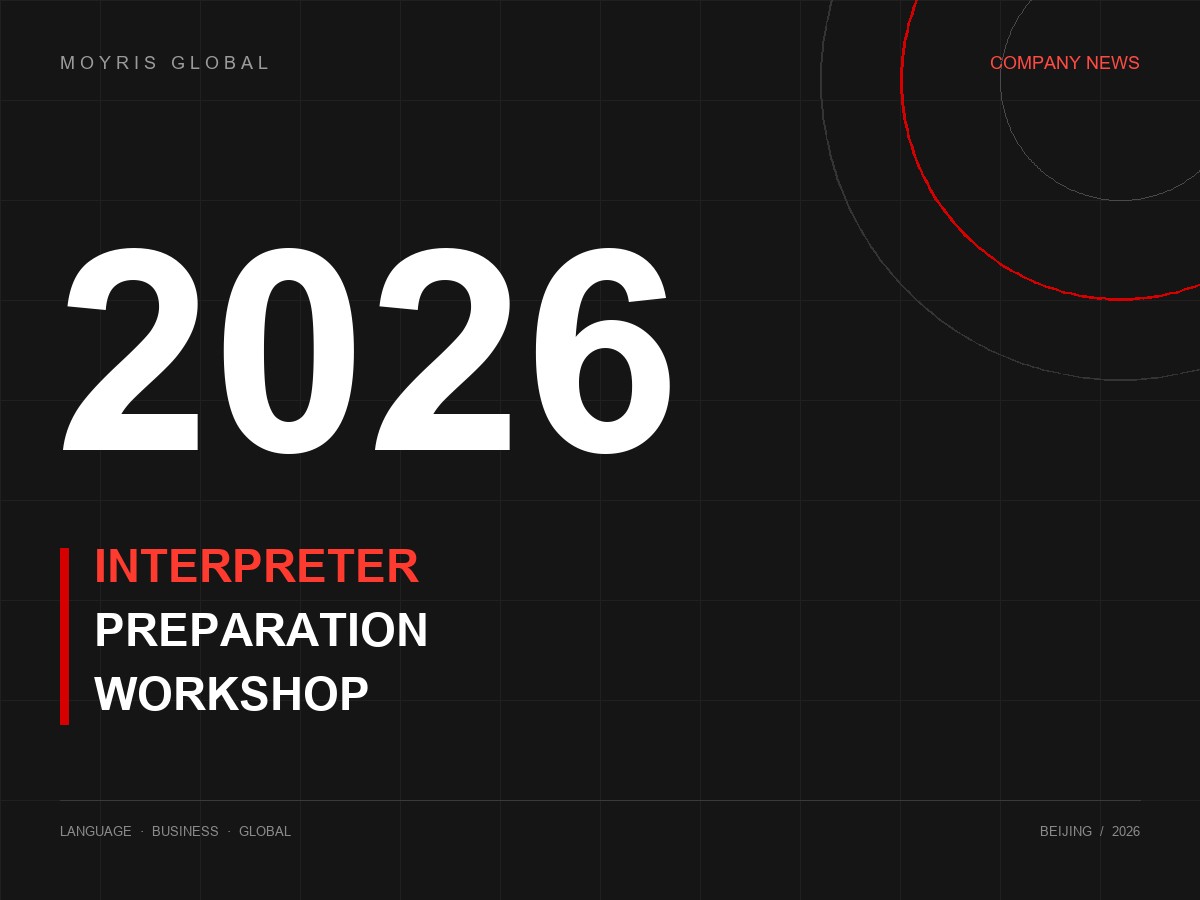
Our 2026 interpreter preparation workshop brought project coordinators and language professionals together for a day of scenarios, terminology work, and feedback. The goal was not to rehearse a script. It was to make the team's decision-making more consistent.
Why we run the workshop
Every assignment has its own context, but the pressure points are often similar: a speaker who moves too quickly, a term with no clean equivalent, a question that shifts the tone of the room, or a last-minute change that alters the brief.
Practising those moments in advance makes them easier to recognize and easier to manage. It also gives project teams a shared vocabulary for talking about quality before an issue arises.
What the day looks like
The workshop combines short case scenarios with live interpretation exercises. Participants work through terminology drills, handover routines, and difficult Q&A sequences. Each exercise is followed by structured feedback from peers and project leads.
Confidentiality is part of the programme. Case materials are anonymized, and the same discretion that applies to client work applies to the workshop room.
What we take forward
The output is practical: updated glossaries, refinements to our briefing template, and a clearer sense of which preparation steps make the biggest difference. Feedback from the day is fed back into how we plan and coordinate assignments.
Professional development is not separate from service quality. It is one of the ways we make quality repeatable, assignment after assignment, language after language.
Preparation is how a team turns individual expertise into a reliable standard.
Moyris Editorial Team
We will continue to run these sessions as part of our network development and project preparation. For clients, the benefit is straightforward: a team that has already thought through the difficult moments before the meeting begins.